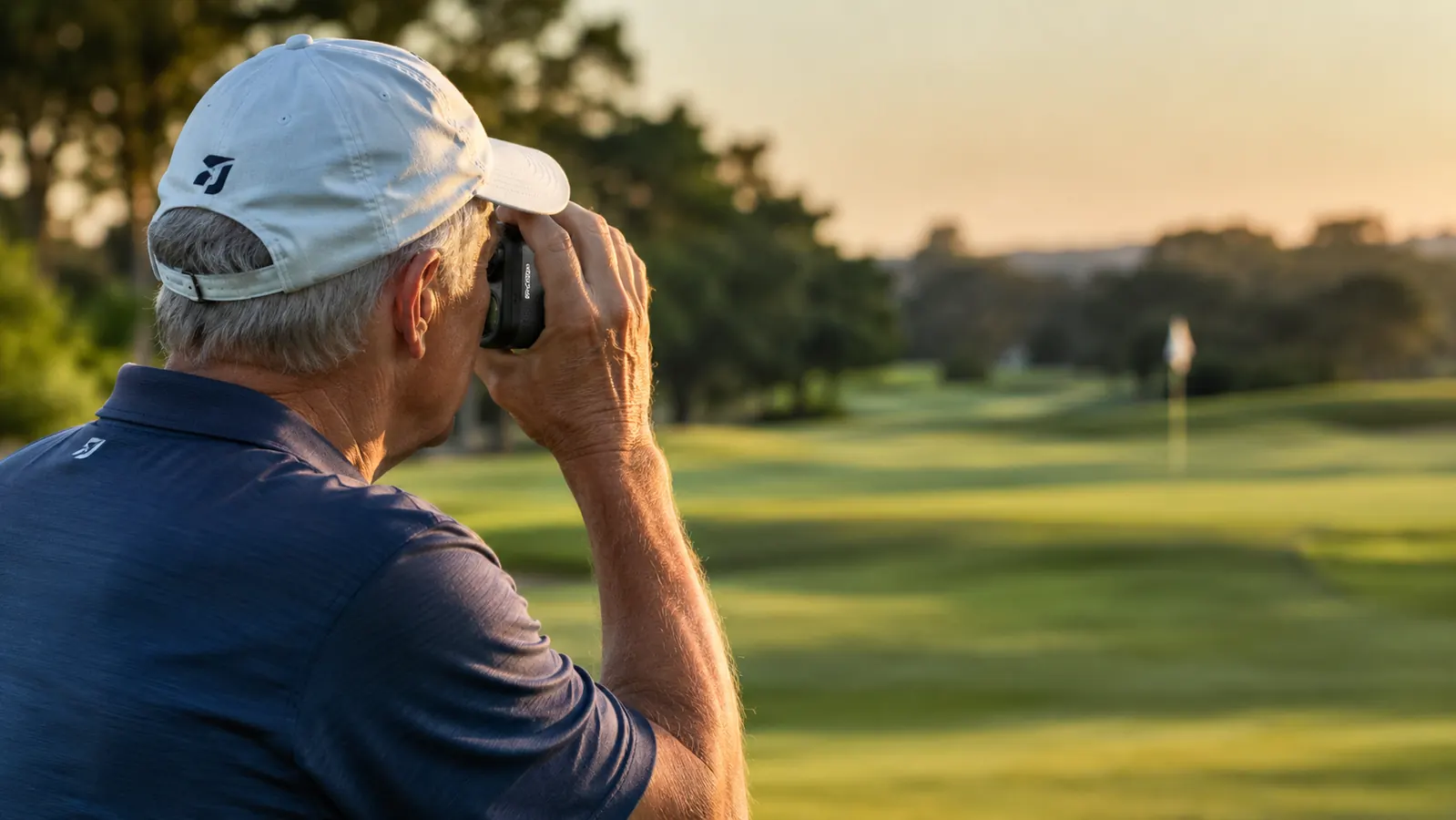
I will tell you straight up: I bought the Callaway 300 Pro because I was tired of guessing. Two seasons ago I stood on the tee at my home course, looked at the flag, and told my buddy I had 152 yards. He pulled his rangefinder and said 138. I hit a smooth 7 iron, flew the green by a good ten yards, and spent the walk to the next tee listening to him remind me about it. That is the whole reason this review exists. I wanted to know if the Callaway 300 Pro was worth the money for a mid-handicap guy like me, or if I should have just kept pacing off yardages like a caveman.
This is the honest version, the one that tells you what nobody puts in the product photos. I have used the Callaway 300 Pro for two full seasons on a public course in the Upstate of South Carolina, plus a lot of range sessions and a few rounds in weather I should not have been playing in. It has been dropped, rained on, and left in the bed of my pickup overnight more than once. Here is what I actually think, the good and the bad, and the part at the end where I tell you who should skip it entirely.
The Quick Verdict
The Callaway 300 Pro is a fast, accurate, easy-to-read rangefinder that does exactly what most amateurs need. It is not the cheapest, the slope switch is easy to forget, and the case is mediocre. For a weekend golfer who wants reliable numbers without fiddling, it is hard to beat.
Amazon Check Today's Price →Stop guessing your yardage. Get the number in under two seconds.
The Callaway 300 Pro locks onto the flag fast, reads clearly, and has an external slope switch that is easy to turn off for legal play. If you are tired of flying greens and coming up short, this is the rangefinder I reach for every round.
Amazon Check Today's Price on Amazon →How I've Used It
I am not a gear reviewer who hits ten balls and writes 2,000 words. I am a 61-year-old retired shop teacher who took up golf seriously at 52, plays a public course twice a week with the same Tuesday group, and carries a handicap around 18. My home course has a lot of doglegs, a few blind approach shots, and one par 3 where the green sits behind a pond that eats more balls than I want to count. That is the course where the Callaway 300 Pro has earned its spot in my bag.
Over two seasons I have used it for approach shots, for checking the distance to the front of the green when the flag is hidden, for layup numbers on par 5s, and for the occasional range session where I wanted to know exactly how far I was actually carrying the ball. I have also used it in the rain, in the fog, and in the kind of late-afternoon sun where the flag is a white dot against a bright sky. The short version: it locks on fast, it reads true, and it has never once given me a number that made me say, that cannot be right.
One morning last October I took it to the range with a bucket of 60 balls and a notepad. I hit ten 8 irons and lasered the carry on every one. The numbers ran from 141 to 149, which told me more about my swing that day than about the device, but it also told me the Callaway 300 Pro was consistent enough to trust for that kind of work. A rangefinder that wobbles by five yards is worse than no rangefinder at all, because you start second-guessing every number. This one does not wobble.
What Nobody Tells You Before You Buy
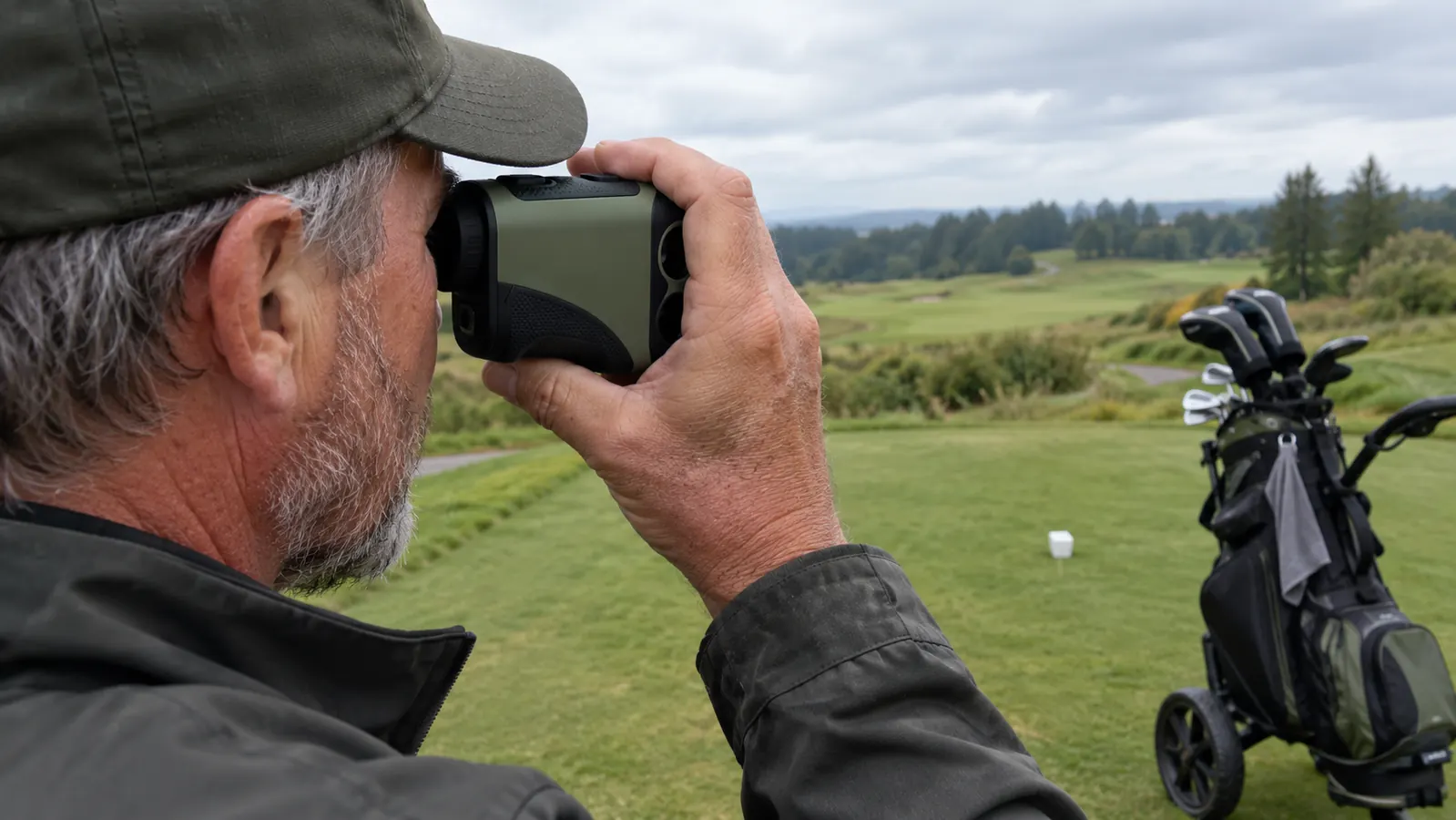
Here is the part the product page leaves out. The Callaway 300 Pro is not a complicated piece of equipment, but it has a few quirks that only show up after you own it. The external slope switch on the side is genuinely useful, but it is also easy to bump when you pull the rangefinder out of the case. I have played two tournament rounds where I looked down and realized the slope reading was on when it should have been off. That is on me, not the device, but it is the kind of thing nobody mentions in the reviews.
The other thing nobody tells you: the case it comes with is fine, but not great. The magnetic closure works, the belt loop is sturdy, and it protects the unit well enough. But the rangefinder does not sit in the case the way you expect, and after two seasons the case is starting to show wear. I replaced it with a cheap neoprene pouch from the golf shop and honestly prefer it. That is a small thing, but it is the kind of detail that makes a review honest.
There is also the learning curve of the button. The power button and the mode button sit close together, and for the first month I hit the wrong one more than once. I would press what I thought was the fire button and cycle the display instead. It took me about four rounds to build the muscle memory, and now I do it without looking. A younger guy with better thumbs might not have that problem, but I am telling you because it is real and it is fixable.
The Callaway 300 Pro has never once given me a number that made me say, that cannot be right. That is the whole review in one sentence.
The Numbers That Matter
The Callaway 300 Pro gives you distances out to about 550 yards, which is more than I need on any hole I play. The magnification is 6x, the lens is clear, and the display is bright enough to read in full sun. The jolt vibration when it locks onto the flag is the feature I did not know I needed. When you are aiming at a flag that is tucked behind a bunker, that little buzz tells you the laser has the flag, not the trees behind it. That single feature has saved me more bad decisions than anything else on the device.
The slope function is where the Callaway 300 Pro earns its keep for a course like mine. My home course has a par 3 where the green sits maybe eight feet above the fairway, and another where the approach plays downhill into a green that slopes away. The slope reading adjusts the number so I know whether to take one more club or one less. It is not magic, and it does not fix a bad swing, but it takes one variable out of the decision. For a mid-handicap player, that is worth a lot.
I will give you a concrete example from the 12th hole, the one with the pond. The flag was on the back shelf, 164 yards by the laser, and the slope reading said 171 because the green plays slightly uphill. Two seasons ago I would have hit the 7 iron I always hit from that spot and watched it come up short and roll back toward the water. Instead I hit a hard 6, landed on the front edge, and two-putted for par. That is the difference the slope number makes on a course you know well.
One more number that matters to a player like me is how many times I actually reach for the Callaway 300 Pro in a round. On a normal Tuesday it comes out of the cart bag somewhere between twenty and thirty times, mostly on approach shots and on par threes. I rarely bother with it inside fifty yards, because at that range I am playing feel, not math. Where it earns its keep is the shot from 130 to 170 yards, the one where a single club of difference decides whether I am putting or chipping. On those shots I stopped guessing off the sprinkler heads, and I stopped arguing with my playing partners about whether the flag was front or back. That alone made the rounds go a little quicker.
Where It Shines
The Callaway 300 Pro is at its best on approach shots from 100 to 200 yards, which is exactly the range where most of my rounds are won or lost. It locks onto the flag fast, usually in under two seconds, and the display is easy to read without my reading glasses. The jolt vibration is the standout feature, because it tells you the device has the flag, not the background. On a course with trees behind the greens, that is the difference between a confident swing and a guess.
It is also genuinely fast. I have played with guys who take twenty seconds to get a number, and it slows the whole group down. With the Callaway 300 Pro, I get the number, make the club decision, and hit. The pace of play matters to me, especially on a busy public course where the ranger is already giving us the look. This rangefinder keeps the round moving.
The clarity of the lens surprised me. I wear progressive bifocals, and a lot of rangefinder displays look like a blur of red numbers until I find the right part of my glasses. The Callaway 300 Pro display is sharp enough that I can read it without hunting for the sweet spot in my bifocals. That matters more to me at 61 than it would have at 40, and it is one of the reasons I have not shopped for a replacement.
Where It Falls Short
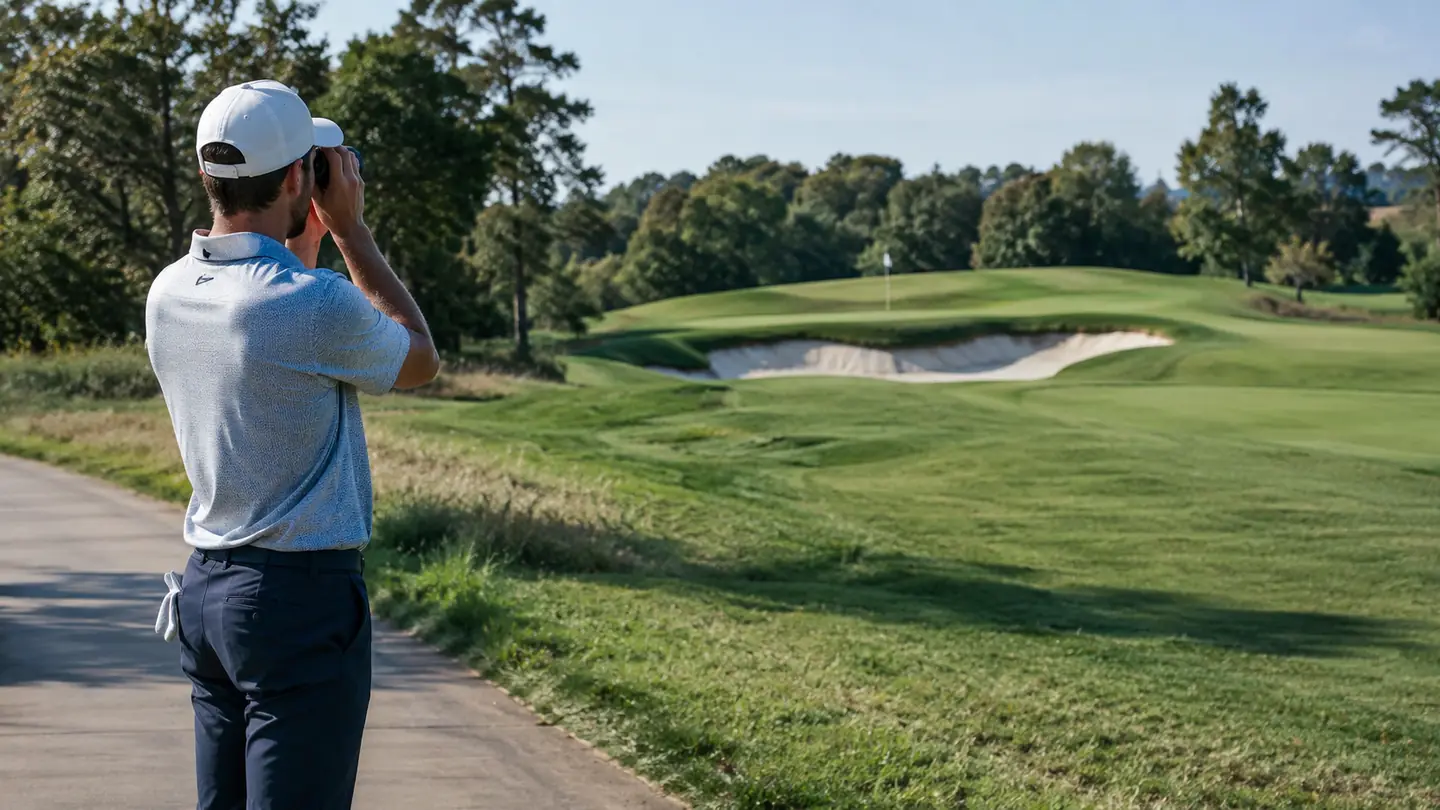
The honest cons are these. The slope switch is easy to bump, as I said, and if you play in tournaments you have to check it before every shot. The case is mediocre and I replaced it. The battery door is a little stiff, and the included battery is nothing special, so plan to swap in a fresh one at the start of the season. None of these are dealbreakers, but they are real, and pretending they do not exist would make this a different kind of review.
The other con is the price. The Callaway 300 Pro is not the cheapest rangefinder on the market, and if you only play a few times a year, you can absolutely get by with a cheaper model or even a phone app. I will not tell you this is a bargain, because it is not. It is a well-made tool that costs what well-made tools cost, and you have to decide whether that is worth it for your game.
One more thing I noticed: the rubber armor around the body picks up dust and chalk from my bag, and it does not wipe completely clean. It is purely cosmetic, and I do not care about it, but if you are the kind of person who likes their gear to look new, you will be wiping it down. The lens cap also fits snugly, which is good for protection and mildly annoying when you are trying to get it off one-handed while holding a club.
Who This Is For
The Callaway 300 Pro is for the golfer who plays at least once a week, cares about their score, and is tired of guessing yardages. It is for the mid-handicap player who hits the ball well enough that the right club choice actually matters. It is for the guy who wants a rangefinder that locks on fast, reads clearly, and does not require a manual to operate. If that sounds like you, this is the rangefinder I would buy again tomorrow.
It is also for the player who wants one less excuse. I am not going to tell you the Callaway 300 Pro lowered my handicap, because it did not, at least not on its own. What it did was remove the guesswork from the 100 to 200 yard shots where I used to talk myself into the wrong club. When I miss a green now, it is because I hit a bad shot, not because I aimed at the wrong number. There is real peace of mind in that.
Who Should Skip It
Here is the part where I tell you who should skip the Callaway 300 Pro. If you play a handful of times a year and just want to get out of the house, save your money. If you are a high-handicap player who is still working on making consistent contact, a rangefinder will not fix your swing, and a cheaper model will give you the same number. If you play in tournaments every weekend and need the absolute fastest lock in the game, there are pricier options that shave a fraction of a second. And if you hate carrying extra gear, the phone apps are good enough for casual rounds. The Callaway 300 Pro is a great tool, but it is not for everyone, and I would be doing you a disservice to pretend it is.
I would also say this: if you already own a rangefinder that you trust, even an older one, the Callaway 300 Pro is not a must-buy. The gains here are real but incremental, a faster lock and a clearer display and a slope switch that is easier to flip. If your current unit still gives you numbers you trust, keep it. Upgrade when it dies, not because a new one is shiny. That is the advice I would give my buddy at the 19th hole, and it is the advice I am giving you.
What I Liked
- Fast flag lock, usually under two seconds
- Jolt vibration confirms the laser has the flag, not the background
- External slope switch is easy to turn off for legal play
- Bright, clear display that is readable in full sun
- Solid build that has survived two seasons of drops and rain
Where It Falls Short
- Slope switch is easy to bump by accident
- Included case is mediocre and I replaced it
- Battery door is stiff and the included battery is nothing special
- Not the cheapest option for casual players
Two seasons in, I would buy it again. Here is today's price.
The Callaway 300 Pro has been in my bag for two full seasons, and it has never let me down. If you are ready to stop guessing and start trusting your numbers, check the current price on Amazon.
Amazon Check Today's Price on Amazon →