

Here is where I found myself last spring: standing on the 10th tee at our Tuesday course, staring at a fairway bunker I could not size up to save my life. Was it a 160-yard carry or a 200-yard carry? My group had been having this same argument for two seasons. Half of us said lay up, the other half said go for it, and the honest truth was that nobody had the real number. After one too many rounds of guessing, I bought a rangefinder. I read a pile of reviews, asked a couple of guys whose scores I trust, and landed on the Callaway 300 Pro with the external slope switch.
I have carried that rangefinder for the better part of a season now, every Tuesday round plus a range session most weeks. The short version is that it works, it reads fast, and it has survived two drops onto the cart path. The longer version has a few more wrinkles, and I think it helps to hear them before you spend your money. I went in half expecting another gadget that would end up in a drawer like some of my other purchases. That is not what happened. Here is the plain-spoken account of the Callaway 300 Pro from a 61-year-old weekend golfer who just wanted to know the right yardage.
The Quick Verdict
A fast, clear rangefinder that took the guesswork out of my approach shots. The slope switch works as advertised, the battery has lasted a full season, and it locks onto the flag in about two seconds. It has a couple of quirks, the manual is thin, and it will not fix a bad swing, but for a mid-handicapper it earns its spot in the bag.
Amazon Check Today's Price →Ready to stop guessing your yardages?
The Callaway 300 Pro has been in my bag for a full season of Tuesday golf. It reads quickly, it holds up, and the slope switch actually gets used. See today's price on Amazon and decide whether it fits your game.
Amazon Check Today's Price on Amazon →How I've Used It
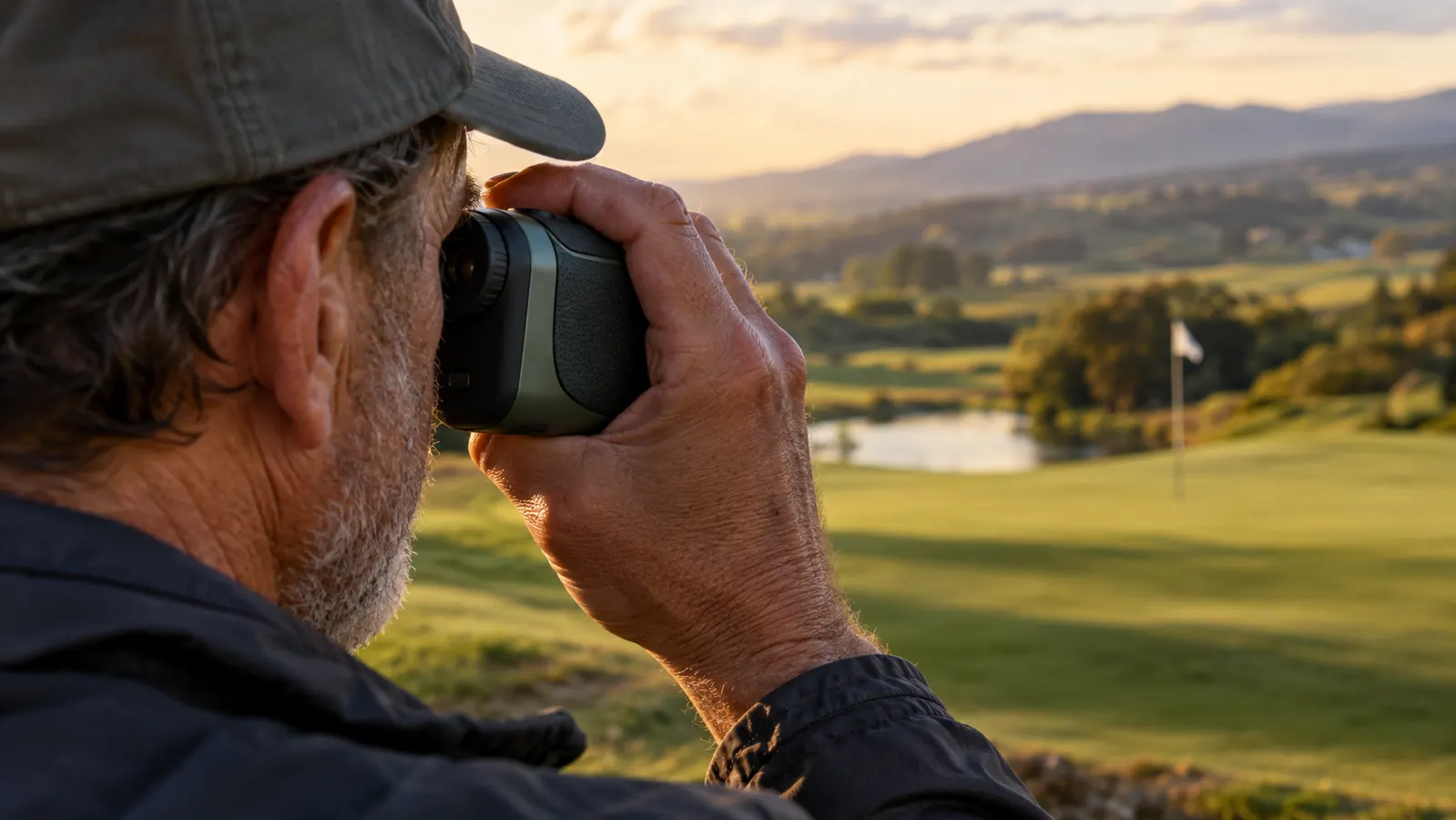
I did not trust it on the course right away, so I started on the range. I shot the 100-yard marker, then the 150, then the 200. Each one came back clean and quick, usually within two seconds of pressing the button. I will admit I was skeptical the first few minutes, but the numbers came back so steady that the skepticism did not last long. Then I aimed at the flag on the practice green from about 80 yards out. The little circle locked on and the unit gave a short buzz to let me know it had the pin. That first session told me the basics were solid.
On the course, I mostly use it for approach shots. On par 4s and 5s I need to know whether I'm hitting a 7 iron or an 8 iron, and around here that answer depends a lot on elevation. The greens sit on hills, so a 155-yard shot into an uphill green plays more like 165. In slope mode, the Callaway gives me the adjusted number. Having that number in my head before I pull a club has been worth the price of the unit on its own. It does not matter what the scorecard says the hole plays. What matters is the number from where I am standing.
I also use it off the tee on holes where the fairway bends and you cannot see the landing area, and for layups on par 5s. It handles all of that without complaint. On a couple of blind holes I now know exactly where the trouble starts, which keeps me from hitting a hero shot that ends up in the trees. That alone has saved me some penalty strokes. After maybe thirty rounds and a dozen range sessions, it still reads as fast as it did on day one.
The Tuesday group has noticed. The arguments about that fairway bunker are mostly gone, replaced by somebody calling out a real number. Now the debate is about which club to hit, which is a much better argument to have. One of the guys still pulls a club before I finish reading the yardage, and some things will not change. Nobody is more surprised than I am that a little gadget settled a two-year argument.
What It Does Well
The biggest thing is the lock speed. I have used rangefinders that hunt, where the number bounces around for five or six seconds before settling. The Callaway 300 Pro locks on and holds. On a clear day I can shoot a flag at 180 yards and get a steady number in two seconds or less. The vibration confirmation is a small thing, but it means I do not have to take my eye off the target to check the screen.
The display is easy to read even in the bright South Carolina sun. That matters more than you would think. My old eyes need a clear screen, and this one delivers. The 6x magnification is enough to see the flag at the distances I normally play, and the lens quality is a clear step up from the budget units I tried years ago.
The battery has lasted the entire season on one CR2, and I have not changed it yet. The rubber body has taken two drops onto the cart path and the lens is unscratched. I do not baby my equipment, and it has not complained. It feels solid without being heavy, and it rides in the cart pocket all day without getting in the way.
Using it one-handed is easy. The button sits right where my index finger wants it, and I can hold the unit steady while I read the number. There is no focus ring to fiddle with every time I raise it, which is the kind of detail you only notice when it is missing. I set the focus once at the start of a round and forget about it.
The Slope Switch Question
The feature that sold me on this model is the external slope switch. Flip it on and the unit shows the adjusted yardage that accounts for the uphill and downhill. Flip it off and you get the straight-line distance, which is what you need for any round that officially counts.
Some guys in my Tuesday group say slope is cheating. I do not see it that way. It is information, like knowing the wind is in your face, and it still comes down to whether you can hit the shot. What I like is that the switch sits right on the side of the unit instead of buried in a menu. I use slope for casual rounds and turn it off when the round means something, like a club event or a charity scramble. The switch is a little stiff with a glove on, but that is a small gripe.
For a mid-handicapper like me, slope probably saves a stroke or two a round simply by keeping me from grabbing the wrong club on a hilly course. It does not fix a bad swing and it will not do the work for me. But it takes one variable out of the equation, and on a course with real elevation changes, that matters.
I spent one session shooting the same target with slope on and then off to see how much the number moved. On the flat range, the difference was nothing, which told me the unit was being honest. On the course, standing on a hill above the green, the adjusted number ran ten or twelve yards different from the straight line. That is a real difference, the kind that changes your club choice.
How It Compares to the Budget Options
Before I bought this one, I tried a cheap rangefinder from a big box store. It worked after a fashion, but the number hunted, the display washed out in sunlight, and it felt like a toy. That experience is why I moved up to the Callaway, and the difference showed up on the first range session. If you are weighing the same choice, I put together a [head-to-head comparison of the Callaway 300 Pro and the budget options](/callaway-300-pro-vs-budget-rangefinders) that goes into more detail than I will repeat here.
The short version is that you pay more for the Callaway, and for most mid-handicap players it is money well spent. The lock speed, the optics, and the build quality are all a step up. But I will also say this: if you play flat, open courses and rarely shoot a flag from more than 120 yards, a budget unit may be plenty. It depends on your game and your course.
Here is the thing about the budget options, though. Some of them are genuinely fine for a golfer who just wants a rough number on a flat municipal course. The problem I ran into was the hunting and the washed-out display in bright light. If you can live with those, you can save money. I could not, which is why I'm on the Callaway.
The Verdict After a Full Season
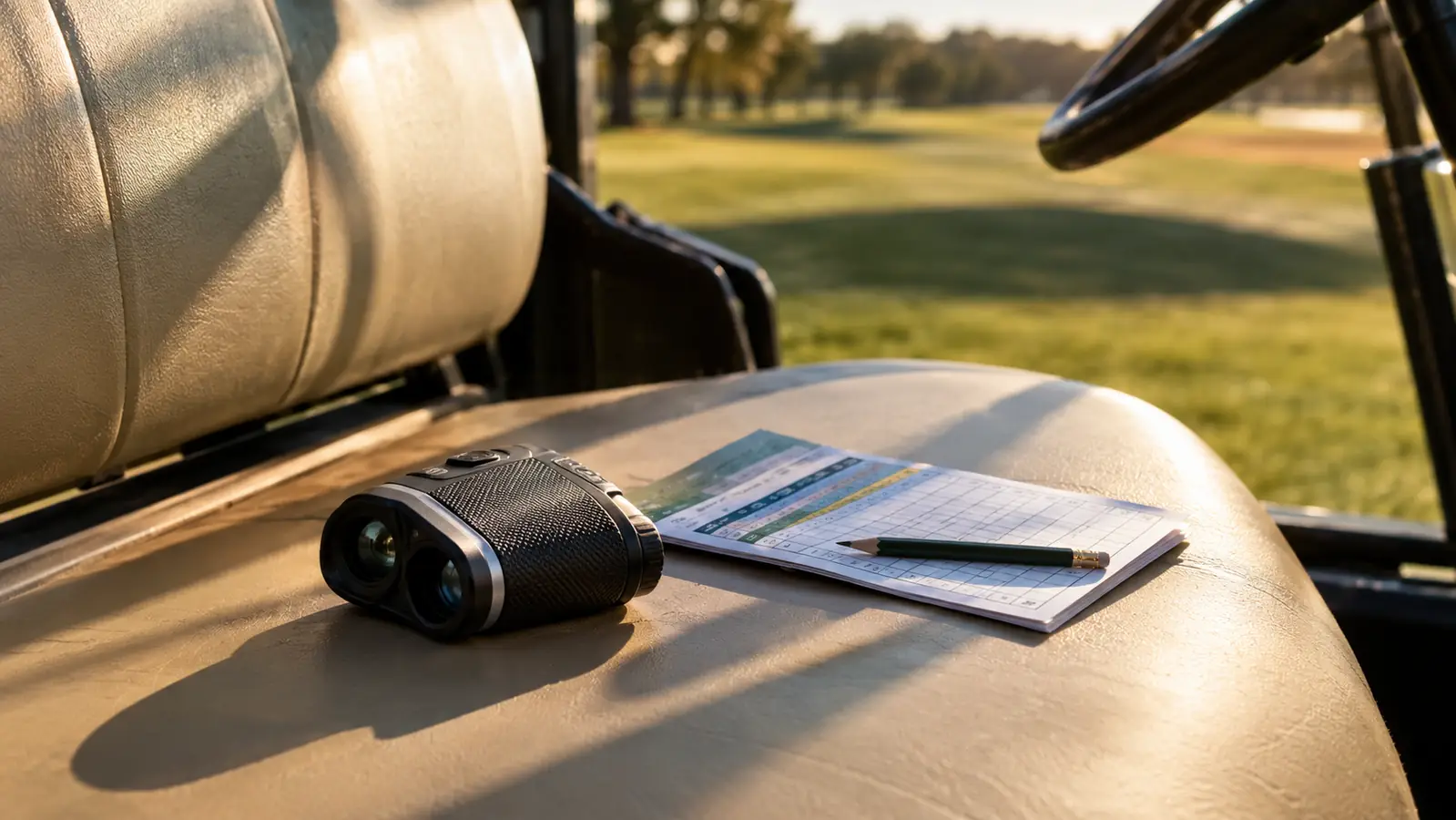
After a full season, here is my honest bottom line. The Callaway 300 Pro does what it says it will do. It gives me a fast, reliable yardage on every shot where I need one. It has taken a beating and kept working. The slope switch is useful on my hilly home course, and the battery has not complained once. I have owned gadgets that stopped working a month in. This one has not, and I expect it to keep going for a long while.
It is not the fanciest rangefinder on the market, and I have not tested the tournament-grade units some better players carry. But I can tell you this: it has not turned me into a scratch golfer, because that is not what a tool like this does. What it does is remove the guessing. When you know the real number, you can commit to the shot. The number on the screen does not care how you have been playing, and that is oddly comforting. For an 18-handicapper, committing to the shot is half the battle.
The one habit I would pass along is to keep the lens clean. A little dust on the glass makes the number hunt, and a quick wipe with the cloth that came in the box fixes it. That is the whole maintenance routine. This unit has never needed anything else.
If you want the longer, more rambling story of how I ended up with this rangefinder, it is [written up separately](/callaway-300-pro-advertorial-story). The short version is the one you just read, and it is the honest one.
What I Liked
- Fast, steady lock on the flag, usually inside two seconds
- External slope switch is legal in tournaments when switched off
- Display stays clear and sharp in bright sunlight
- Survived two cart-path drops and still reads perfectly
- One CR2 battery has lasted a full season
Where It Falls Short
- Manual is thin; I figured out a few settings on my own
- Slope switch is stiff when you have a glove on
- Locks quickest when there is contrast behind the flag; dark trees slow it down
- More rangefinder than you need if you only play flat, short courses
When you know the real number, you can commit to the shot. For an 18-handicapper, that is half the battle.
Who This Is For
The Callaway 300 Pro is for the golfer who is tired of guessing. If that is you, it will earn its spot in the bag faster than almost anything else I have bought for this game. I put together [ten reasons a rangefinder helps a mid-handicap golfer](/10-reasons-a-rangefinder-helps-mid-handicap-golfers), and this unit checks every one of them.
It is also for players whose home course has hills, because that is exactly where the slope switch pays for itself. And it is for the guy who wants a tool that can take a bump or two and keep working, season after season. That kind of durability is worth something when you ride a cart on rough paths the way I do.
I think the sweet spot for this unit is the golfer with a handicap somewhere between about 10 and 25. That is a wide range, I know, but it covers most of us who play for fun and still want to play our best golf. One more thought: if you already own a rangefinder that you trust, there is no rush to switch. This one does not do anything a good unit does not already do. It just does it a little more dependably. If you are new to the game, read the next section before you buy anything.
Who Should Skip It
Skip it if you play a flat, open course and mostly hit the same three clubs off the tee. Skip it if you know you will not use it, because a rangefinder that lives in the trunk helps nobody. And skip it if you expect a tool to fix a slice or a chunked chip. It will not do that. If any of that sounds like you, save your money and put it toward a lesson.
If you are still working on making solid contact, a rangefinder is a distraction. Learn to hit the ball first. And if you walk and carry your bag, the extra weight in your pocket may not be worth it. I ride in a cart most days, so it is no burden for me. There is also nothing wrong with borrowing a rangefinder for a season to see whether you actually use one. Some of the guys in my group own one and still beat me with nothing but a yardage book. I say that as a guy who used to think feel was everything, and there are plenty of good players who still play that way.
The rangefinder that has been in my bag all season
I have carried the Callaway 300 Pro through a full season of Tuesday golf. It reads fast, it holds up, and the slope switch earns its keep on hilly courses. If you want a dependable yardage number on every shot, this is the unit worth a look. Check today's price on Amazon and see if it belongs in your bag.
Amazon Check Today's Price on Amazon →