
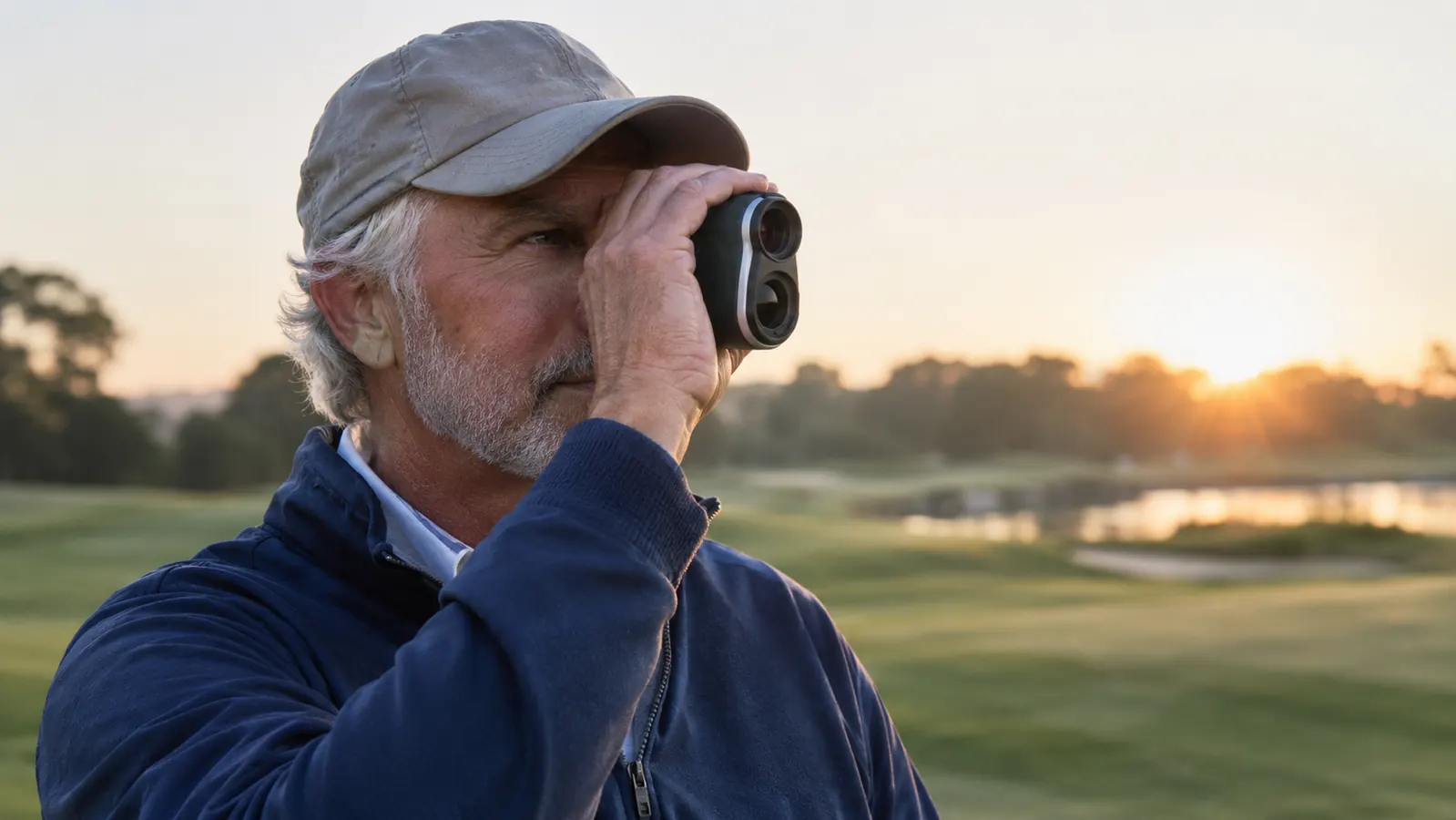
I play golf the way a lot of men my age do: twice a week when the weather allows and every Tuesday with the same four guys. I took the game up at 52, late enough that I spent my first few years guessing yardages. Before I owned a rangefinder, I would stand on the fairway, squint at the flag, and either pull a club from memory or ask one of my buddies what he had. That worked badly enough that I finally ordered a cheap rangefinder online before a member-guest at my home course. It arrived in a plain box with no instructions, but I figured, how hard can it be? For about six rounds it did the job, then the numbers started drifting by five or six yards, which is the difference between a green and a bunker. I sent it back and tried another budget model, and it did the same thing. That is when I picked up the Callaway 300 Pro, and I have not second-guessed a number since.
Here is the short answer, the one I give guys in the clubhouse when they ask. If you play at least twice a month, keep score, or ever enter a club event, buy the Callaway 300 Pro. It locks on fast and gives you the same number every time. If you play a few times a year on the same course, a budget rangefinder can get you close enough. But there is a catch with the cheap ones, and it is not the one people expect. It is not that they are inaccurate on a calm day. It is that they are inconsistent. A wrong number you can learn to correct. A number that changes every time you look is a number you cannot trust at all. That is the honest difference. The cheap one might be fine for a first season, but sooner or later it will make you question a number that matters. If you only trust a rangefinder on the range, you will never trust it on the course.
| Callaway 300 Pro | Budget Rangefinder | |
|---|---|---|
| Upfront Cost | Costs more, but holds its value and works for years | Costs less, but you may replace it sooner |
| Accuracy | Locks onto flag quickly, consistent same number | Hunts and drifts by 4 or 5 yards |
| Slope Switch | External switch on the side, easy to flip for tournament play | Some have slope built in with no way to turn it off |
| Build Quality | Solid feel, survived a drop onto the cart path | Plastic body creaks and battery door feels fragile |
| Ease of Use | One button, quick lock, clear display | Two buttons and a mode menu you have to relearn |
| Best For | Mid-handicap golfers who play every week | Occasional golfers who know their home course |
Where the Callaway 300 Pro Wins
The first time I compared them side by side was on a Tuesday morning in May, on the 11th hole at my home course. The flag was sitting at the back edge of the green, maybe 178 yards from the tee, with a bunker left and a pond right. I took out my budget rangefinder first. It took a full three seconds to give me a number, and when I looked again it said 174. Then 181. I backed off, took a breath, and tried again: 176. That is a five-yard swing on one shot. I honestly could not tell you which number was right. Then I picked up the Callaway 300 Pro. It locked on in about a second and held the same number every time I checked, 178, 178, 178. That is what I mean by trust. I hit a smooth 7-iron, and even though it came up short, it was in the front fringe, not in the pond. The difference was not the club. The difference was that I did not have to stand there and hope. By the back nine that day I had tested the same thing six times. On a par 3 over water the budget called 147, then 152, then 149. The Callaway said 150 every time. On a long par 5 into the sun the budget bounced around more than I did after a bad drive, while the Callaway gave me a number I could take to the clubhouse. That is the whole argument in a nutshell. The budget rangefinder has the same letters on the box, but it does not do the one thing a rangefinder is supposed to do: give you a dependable yardage. It is like a tape measure that sometimes reads 98 inches and sometimes 104 inches, no one would build a shed with that. But on the course, we tolerate it because we do not want to spend the money. I have used the same course for years, so I know the usual yardages, but knowing is different from believing.
The slope switch is the feature I thought I wouldn't use. My Tuesday group plays a casual match, but twice a year we run a little club event where slope is not allowed. With the cheap rangefinder I had to check the rules before every round, and once I forgot and stood on the first tee with a slope reading when everyone else was playing without it. That is exactly the kind of mistake that makes you look like you do not know the game. With the Callaway 300 Pro, I flip the external switch down before I put it in my bag and I never think about it again. The switch is on the outside, so I can check it without taking the unit away from my eye. The display is bright enough to read in the late-afternoon sun, and the whole unit has a solid, balanced feel. I have dropped it on the cart path, left it in the bed of my pickup overnight, and it has not so much as blinked. The budget one would have been dead after that first drop. Last September I left the Callaway sitting on the roof of my truck while I loaded the bag. I drove out of the parking lot and heard it hit the pavement at about twenty miles an hour. It came out of the case, bounced twice, and ended up face down in the gravel. I was sure I had just killed an expensive piece of equipment. But I walked back, picked it up, and it turned on like nothing had happened. The lens was still clean, and when I put it back to my eye, it gave me 87 yards to the flag on the practice green. That is the kind of abuse the budget rangefinder could not survive. It would have cracked or lost its mind, and I would have been back to guessing. The Callaway took the hit and never missed a beat.
Where the Budget Rangefinder Wins
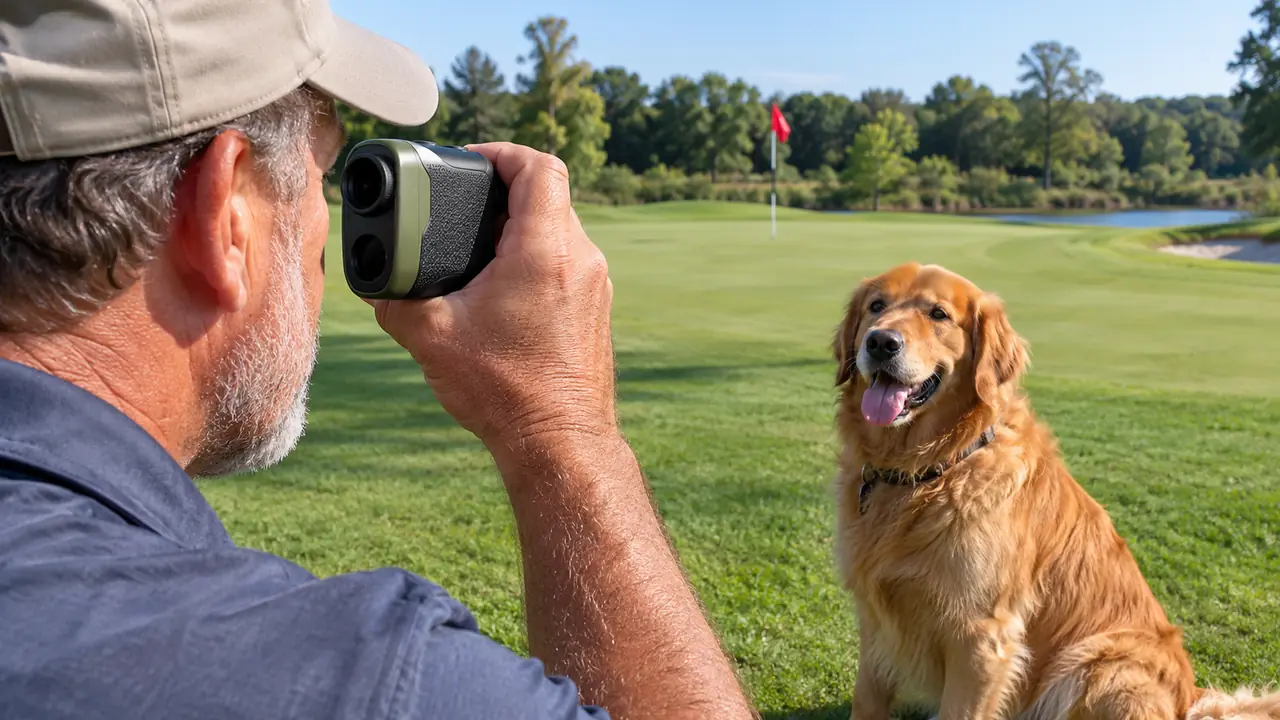
Now let me be fair, because there is a reason people buy the cheap one. It costs less, plain and simple, and for someone who is not sure golf is going to stick, that is a real advantage. You can slide it into the pocket of a rain jacket, and you do not worry about it the way you worry about an expensive tool. If you play the same course every weekend, you probably already know that the 150-yard marker is on the bridge, so the budget rangefinder just confirms what you already know. It is not a bad tool for that job. I handed my first one to a buddy who was just taking up the game, and he used it for an entire season before he outgrew it. That is a perfectly sensible way to ease into the game, and I would never tell someone not to do it. Let me give you a specific example of what the budget gun does well. My buddy would step onto the tee, point it at the flag, and get a number within a couple of seconds. It did not matter if the number was exactly right, because he was not good enough yet for four or five yards to change his club. He would take his 7-iron and swing. The budget rangefinder gave him just enough information to stop pestering me for yardages, which made our rounds a lot more pleasant. That is a real benefit, and it is worth something. It also has no fancy slope switch to get in the way, which is good for a beginner who just wants a number.
The cheap one also taught me what I actually needed. After a season of fighting with it, I knew I wanted a fast lock, a clear display, and a slope switch I could control. That made the Callaway 300 Pro an easy choice when I finally upgraded. The budget rangefinder was lighter, and it did fit in the side pocket of my carry bag without thinking. In fairness, mine lived through two seasons before the battery contacts started to wear and the numbers started to bounce. But when that happened, the numbers were not just off, they were different from one look to the next. That is when I knew I could not keep playing with it, because a rangefinder that lies differently every time is worse than no rangefinder at all. The simple design of the budget unit means there is not much to go wrong, no external buttons to break, no slope switch to jam. When the battery finally died, I just replaced it. But after two seasons the battery contacts wore out and the display started flickering, and that was the end. Still, for someone who plays ten rounds a year, two seasons is probably all they need. It got me through the early years, and I thank it for that.
The number you can trust on every swing
The Callaway 300 Pro is the rangefinder I use every Tuesday. It locks on fast, holds the same reading, and the slope switch is right where you need it. See today's price on Amazon before your next round.
Amazon Check It Out on Amazon →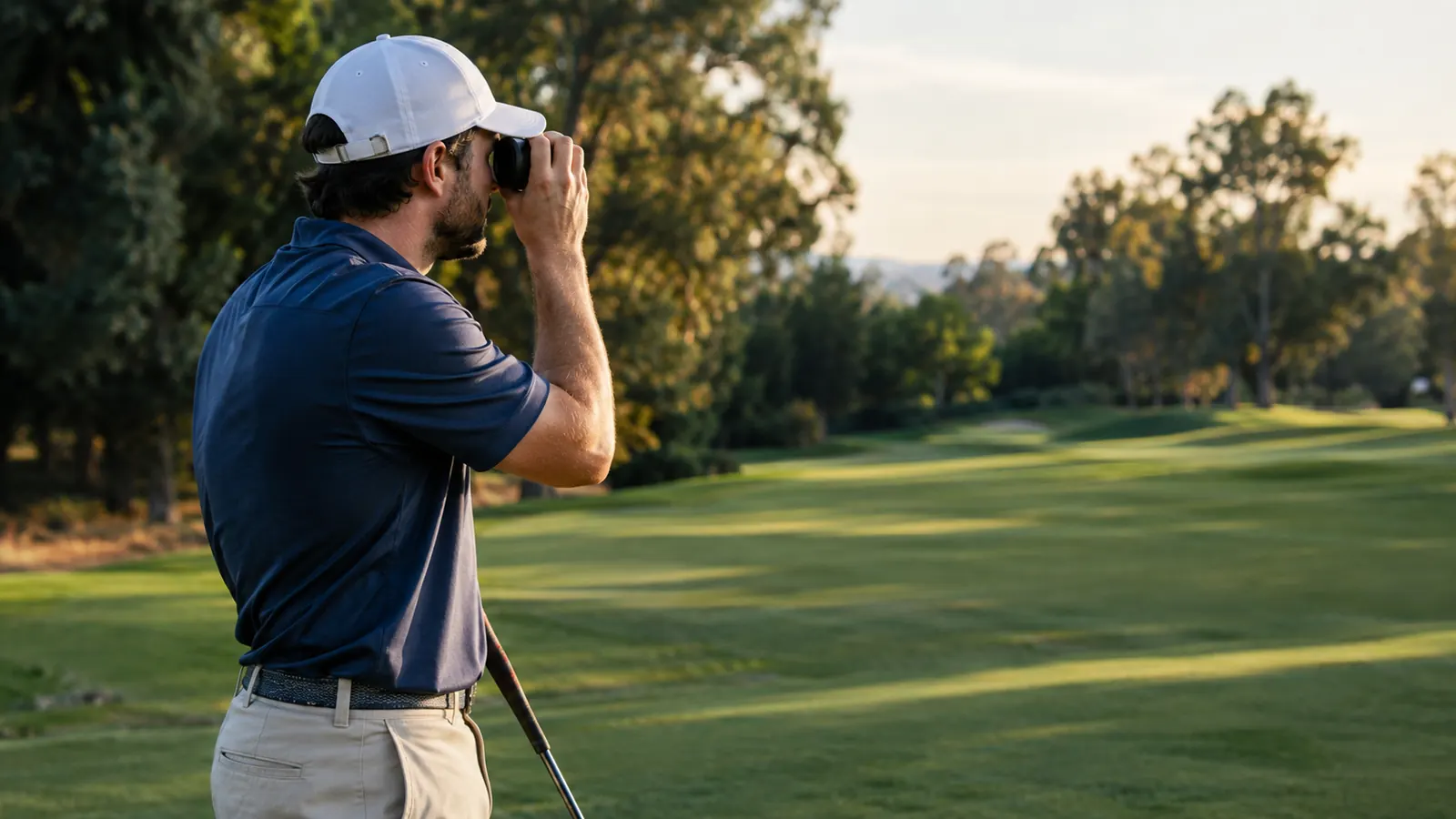
Who Should Buy Which
The long and short of it is this. The Callaway 300 Pro is for the golfer who plays regularly, keeps a handicap, and wants to stop second-guessing every number. That is me. I play to about an 18, and I play with the same four guys every Tuesday. I am not going to win any long-drive contests, but I am not going to embarrass myself either, and part of that is trusting what the rangefinder tells me. If you are in that camp, buy the Callaway and never look back. Let me tell you what changed for me. Before the Callaway, I would stand over a shot and second-guess my club selection almost every hole. Was it 147 or 152? A 7-iron might carry 150 on a good day, but if the number was wrong, I was short or long. That is a lot of mental energy to spend on every shot. With the Callaway, I trust the number. I still hit bad shots, plenty of them, but they are not because I was guessing. That is worth something on the scorecard and even more on the nerves.
If you play a few times a year, usually the same course, and you are still figuring out whether golf is going to be your game, a budget rangefinder is not a terrible start. It will give you a rough number, and it might even last a season or two. Just do not expect it to survive a drop or to give you the same answer twice on a windy day. When you are ready to trust the number, the Callaway 300 Pro will be there, and you will wonder why you waited so long, just like I did. One of my main rules in the Tuesday group is that new equipment gets one round before we give it a hard time. After I showed up with the Callaway, one of the guys asked to borrow it for a hole, and by the third hole he was asking where I got it. He bought one the next week. That is the best endorsement I can give.
One more thing. Do not let the money scare you off. I used to think a rangefinder was a luxury for people who play on private courses. My dad never carried one, and he played the same muni for forty years. But my dad also played with a putter older than me and thought a sand wedge was a luxury. We are not my dad. Golf has changed, and a good rangefinder is now one of the few pieces of equipment that actually saves strokes instead of just costing them. You do not need the most expensive one, but you need one that does its job every single time. The Callaway 300 Pro does its job. It has paid for itself in saved strokes and saved arguments with myself, and I expect to buy myself another one when this one finally wears out, which honestly might be a while, because it shows no signs of slowing down.
Ready to trust the number?
The Callaway 300 Pro is the rangefinder that finally got me to stop guessing. Check today's price on Amazon and see if it should be in your bag.
Amazon Check Today's Price on Amazon →